

Bridging Scan
Bringing your existing skin images into the 3D era
Already have a digital skin record?
If you've previously had total-body photography, mole mapping, or skin imaging using DermEngine, your existing photographs may provide a valuable record of your skin.

What is a Bridging Scan?
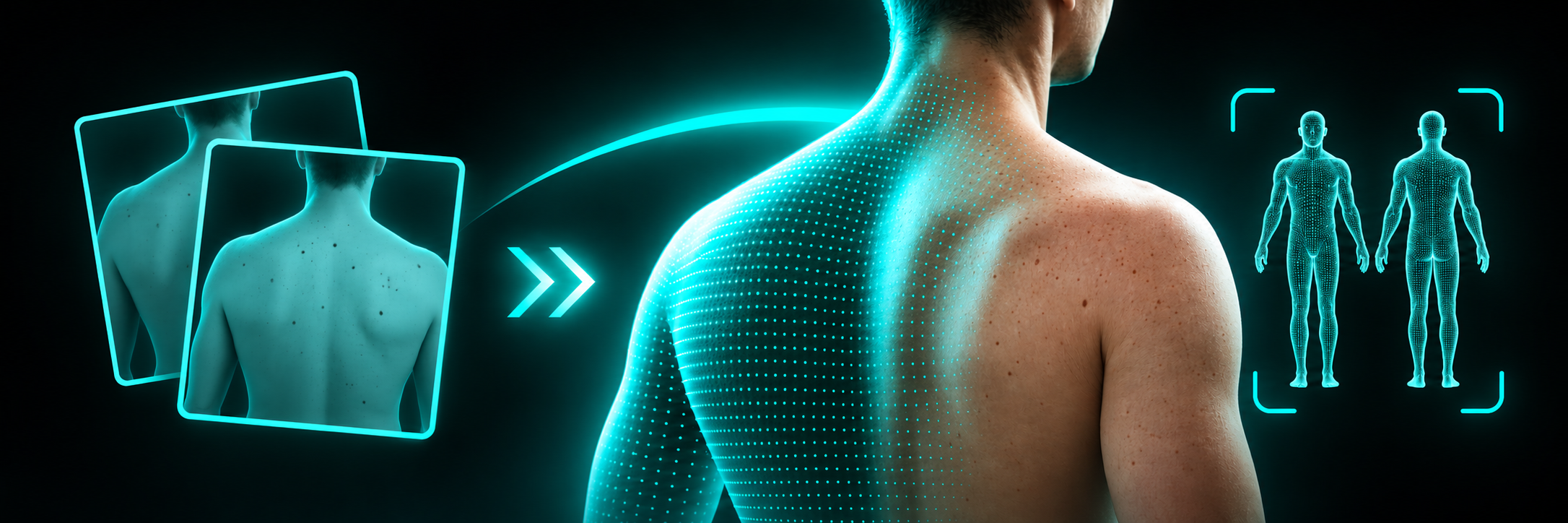
A bridging scan establishes your first standardised 3D skin record while allowing your previous 2D photographs to be considered for future comparisons.
The aim is to maintain continuity in monitoring your skin as you transition to newer imaging technology.
Do I need a Bridging Scan?
A bridging scan may be particularly useful if you have previously:
Had total-body photography or mole mapping.
Had skin photographs stored in DermEngine.
Attended another skin cancer clinic for photographic monitoring.
How does it work?
1. Tell us about your previous imaging
Let us know where and when your photos were taken, and whether you have a DermEngine account.
2. Access your previous images
We'll help establish how your existing photographs can be accessed or shared securely, with your consent.
3. Have your first 3D scan
We'll capture a new, standardised 3D record using OptimaScan, creating a baseline for future imaging.
4. Compare over time
Your new 3D images can be compared with future 3D scans. Previous 2D photographs may also be useful for historical reference,

Important to know
A bridging scan does not convert old 2D photographs into 3D images. It establishes a new 3D baseline while preserving the potential value of your existing photographs. Previous images may not always be accessible or directly comparable.
A 3D Bridging scan may incur a single one-off conversion fee of $10
Ready to transition to 3D?
Contact us before booking so we can discuss your previous imaging and the most appropriate appointment.