

Efudix and Calcipotriol (5-FU-Cal)
Your Questions, Answered


-
Efudix (fluorouracil, 5-FU) combined with calcipotriol is a short-course topical treatment for actinic keratoses and sun-damaged skin. Efudix targets abnormal precancerous skin cells, while calcipotriol enhances the immune response, improving treatment effectiveness and allowing a much shorter treatment duration.
-
This treatment is primarily used for actinic keratoses (AK) and field sun damage, particularly on the face, scalp, forearms, hands, chest, and legs. It is often recommended when there are multiple lesions or widespread sun damage, rather than isolated spots. Sometimes it can be used for ‘thin’ skin cancers.
-
ItEfudix and calcipotriol are mixed together in equal amounts and applied twice daily to the affected area. The cream is left on for 4 hours, then washed off. Treatment time varys with site, as directed by your doctor.
-
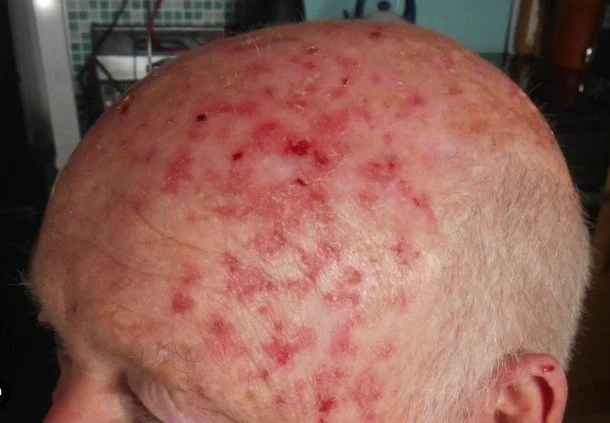
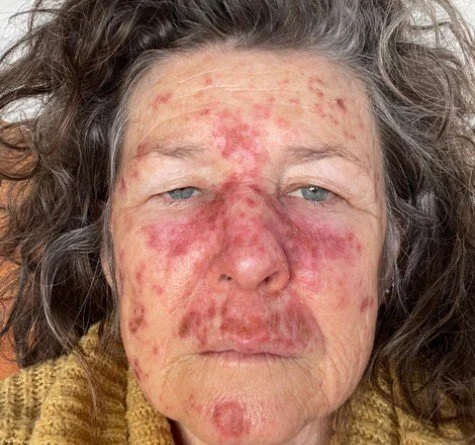
Redness, irritation, swelling, crusting, and mild oozing are expected and normal. These reactions indicate that the medication is working on sun-damaged cells. The intensity varies depending on the degree of sun damage in the skin.
-
After treatment stops, healing usually occurs over 1–3 weeks. During this time, bland moisturisers are used to support skin recovery. Sun avoidance is essential until the skin has fully healed.
-
If you discuss your treatment with your primary care skin cancer doctor, or GP the prescription cost is the same as normal medications.
There may be an additional charge to see the doctor and formulate a written treatment plan
-
Most patients experience discomfort rather than pain, such as stinging or burning. If severe pain, ulceration, or signs of infection occur, treatment should be stopped and medical advice sought.
-
When prescribed appropriately, Efudix + calcipotriol is safe and well supported by clinical evidence. It is not suitable during pregnancy or breastfeeding, and special care is required around pets, particularly dogs, as the medication is toxic if ingested.
-
Yes. Calcipotriol is used off-label in combination with Efudix. Although it was not originally developed for skin cancer treatment, strong clinical evidence supports its use to enhance immune clearance of actinic keratoses under medical supervision.
-
No. Suitability depends on your skin type, extent of sun damage, medical history, and ability to tolerate an inflammatory treatment. Your doctor will assess whether this option is appropriate or whether alternative treatments are better suited.
-
Yes. Efudix and calcipotriol are prescription treatments and should only be used following a medical assessment by a qualified doctor. This ensures the diagnosis is correct and the treatment plan is safe and effective.
Expected reaction
Timeline
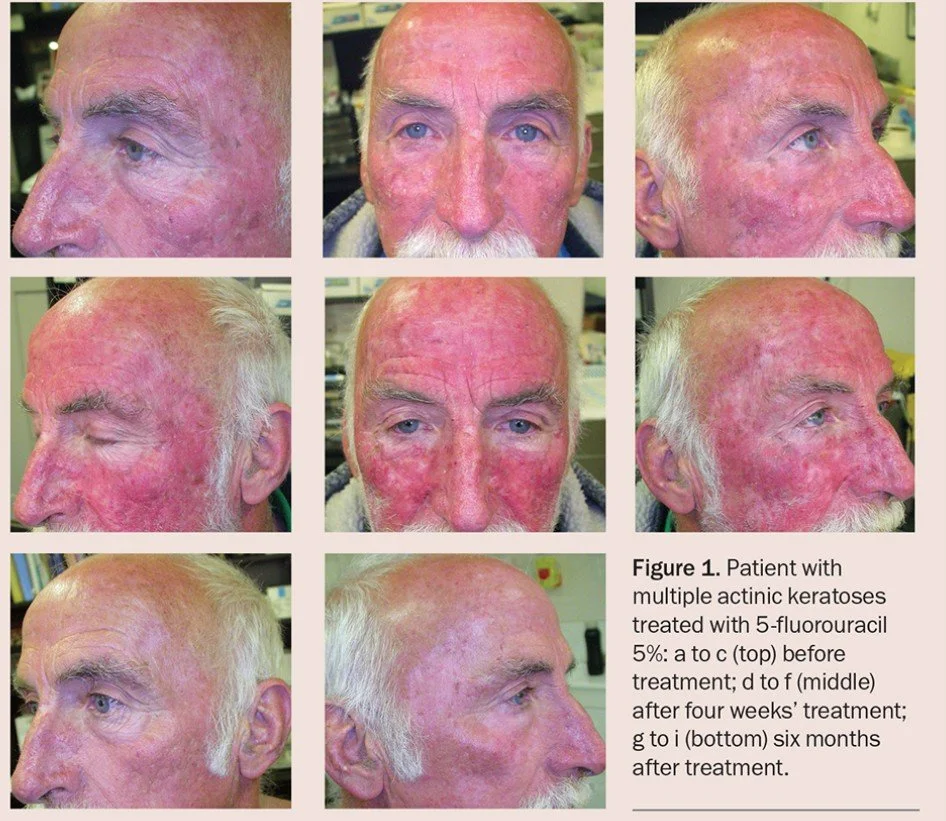
Depending on the area treated, the timeline varies, however, mild redness and irritation usually begin within the first few days.
Redness, swelling, crusting, and soreness typically increase during treatment and often peak after treatment has finished.
This reaction is expected and indicates the treatment is working.
Healing usually occurs over 1–3 weeks, with redness gradually fading as new skin forms. Stronger reactions often reflect greater underlying sun damage.
Spot treatment
vs
Field Treatment
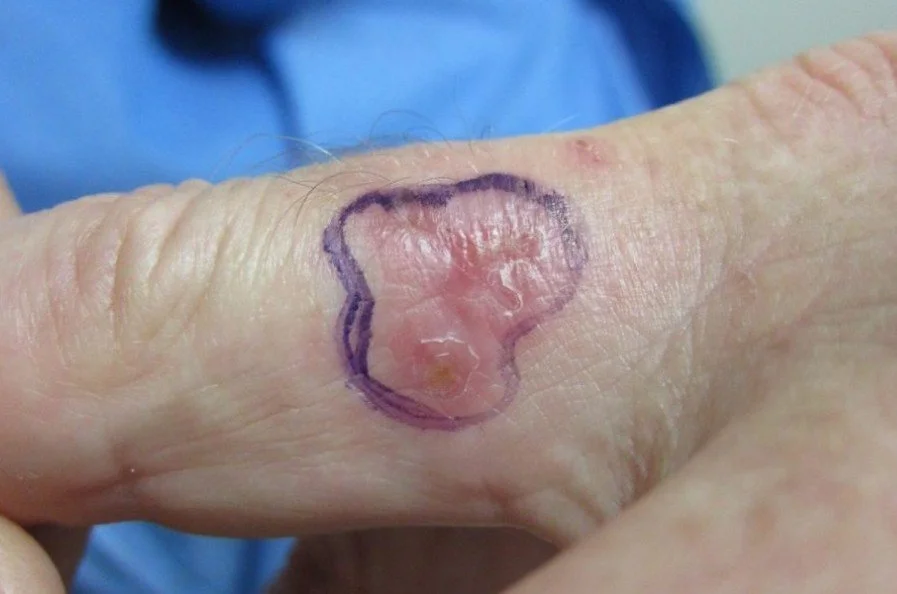
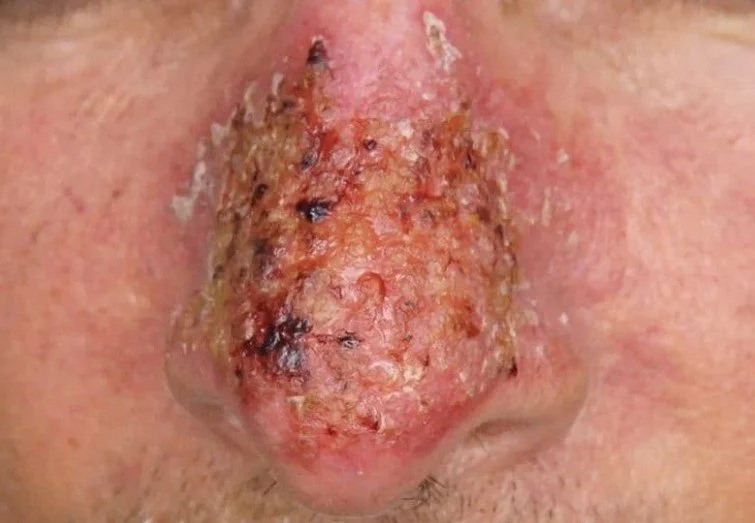
Sun damage can affect the skin in different ways. Sometimes there are only one or two isolated lesions. In other cases, the surrounding skin is already damaged, even if it looks normal.
Spot treatment is like walking through a paddock and dealing with individual weeds as they appear — pulling them out or using a backpack sprayer on each one. This approach treats only the visible lesions and is appropriate when sun damage is limited.
Field treatment is used when sun damage is more widespread. It’s like when weeds have spread across the entire paddock — instead of treating them one by one, you bring in the tractor and selectively boom-spray the whole field. This treats both the obvious weeds and the problem areas you can’t yet see.
Field treatment targets the entire area of sun-damaged skin, not just the visible spots, helping to clear existing lesions and reduce the risk of new ones developing.
Spot Treatment

Field Treatment


Timing and Seasonality of Treatment
5-FU + calcipotriol is a winter-only treatment. The medication makes treated skin highly sensitive to ultraviolet (UV) light, and sun exposure during treatment can trigger a phototoxic reaction, significantly worsening inflammation and discomfort. For this reason, the treatment should only be undertaken when UV exposure can be reliably minimised.
In New Zealand, the recommended treatment window is April through to the end of August, when UV levels are lower and sun avoidance is more practical. Your doctor will help plan treatment within this window and advise on timing to ensure safety, comfort, and optimal results.


A ‘Photo-toxic’ reaction
Efudix (5-fluorouracil) makes treated skin highly sensitive to sunlight. Sun exposure during treatment can trigger a phototoxic reaction, causing excessive redness, burning, pain, and delayed healing — even on cloudy days.
For this reason, strict sun avoidance is essential during treatment and healing. In New Zealand, Efudix-based treatments are therefore limited to the winter months (April to August), when UV exposure can be better controlled.
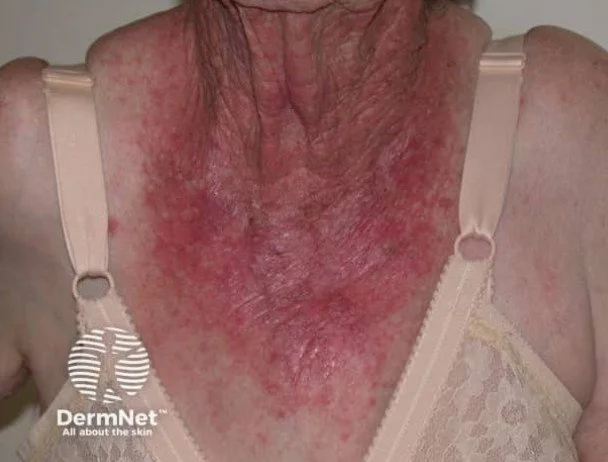
!An example of a severe reaction (which is unusual)!
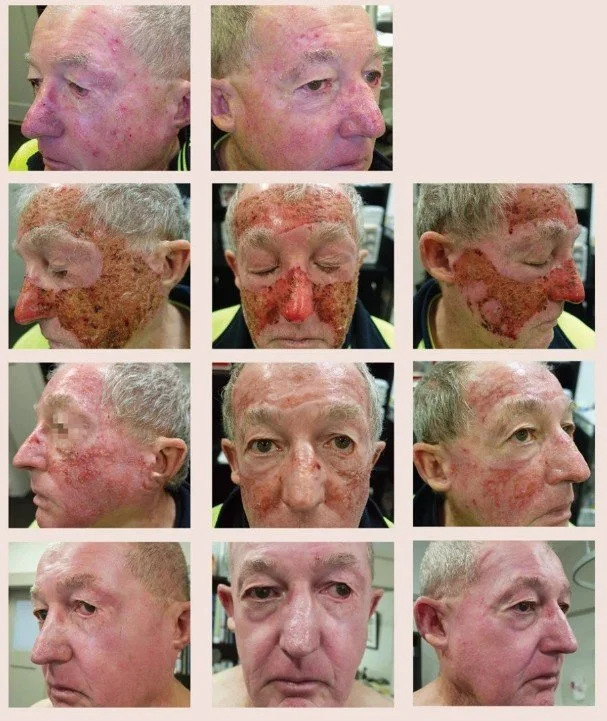
A 69-year-old man presented with diffuse sun damage with multiple actinic keratoses (AKs) was treated with 5-fluorouracil (5-FU) 5%; however, he experienced a severe reaction, presenting with diffuse, significant erythema, desquamation and erosion. He was advised to cease 5-FU and prescribed 1% hydrocortisone ointment twice daily with petroleum jelly three to four times per day until the reaction settled.
Re-epithelialisation and reduced erythema occurred one week after treatment completion
Six months after treatment completion, the patient has minimal erythema and no visible AKs.